
Time to learn the basics
A weekend of short practice sessions
How long it takes ↓Knots to start with
Five
Step 2 ↓What you need
One roll of cotton cord, scissors and tape
Step 1 ↓Best first projects
A bracelet, a keychain, a small plant hanger
Step 3 ↓Is macramé hard to learn?
No. Almost every macramé pattern is made from a handful of knots, repeated and combined in different ways. Most people tie their first bracelet in a single evening. The only thing that takes a little time is an even tension, so that every knot looks the same — and that comes by itself after a few small projects.
Step 1: What do you need to start?
- Cord — a roll of 3 mm cotton cord is the easiest to learn with. A light colour shows every knot clearly. More in the Macramé Cord Guide.
- Scissors and a measuring tape.
- Something to tie onto — a wooden dowel, a metal or wooden ring, or simply tape on the edge of a table. For bracelets, a clipboard works well.
- Optional: a few wooden beads and a comb for brushing out fringe.
You don't need a loom, a hook or any special tools.
Step 2: Which knots should you learn first?
These five knots are behind almost every pattern on this site:
- Lark's head knot — attaches your cords to a dowel or ring. It is the start of nearly every project.
- Square knot — the most important knot in macramé, used in bracelets, plant hangers and wall hangings. See the Square Knot instructions.
- Half knot spiral — a square knot tied only halfway, again and again, so the cords twist into a spiral.
- Half hitch and double half hitch — make lines, diagonals and leaves. See How to tie Half Hitch knots.
- Gathering (wrapping) knot — holds a bundle of cords together at the top or bottom of a plant hanger or tassel.
Tip: practise each knot ten times on a short piece of cord before you start a project. When you can tie it without looking at the video, move on.
More: Basic Macramé Knots: Why the Square Knot Is King · All knot tutorials
Step 3: What should you make first?
Small projects are the best teachers: they need little cord, you finish them quickly, and you use the same knots again and again.
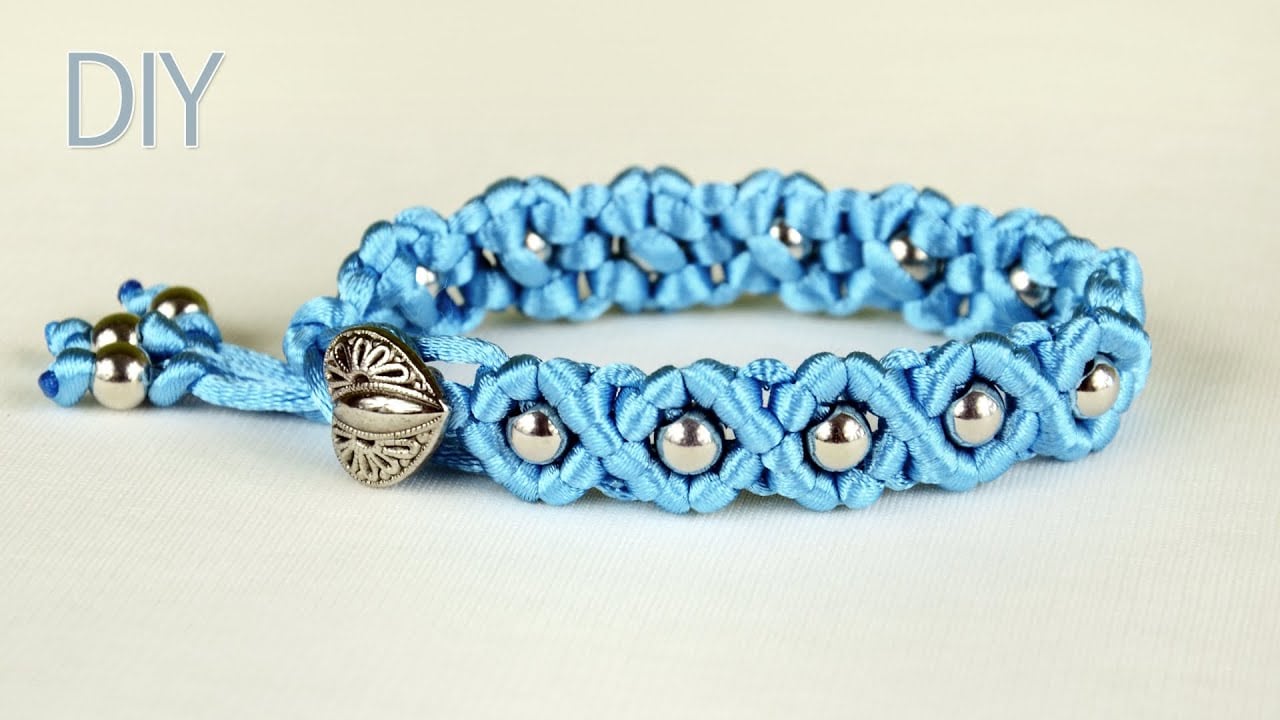
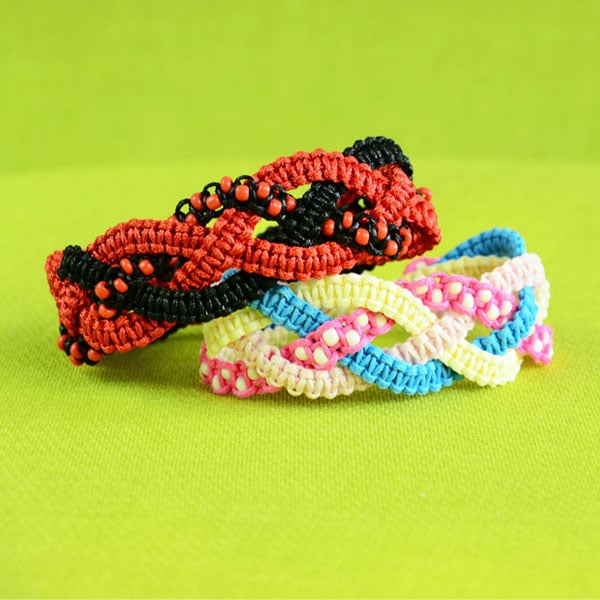
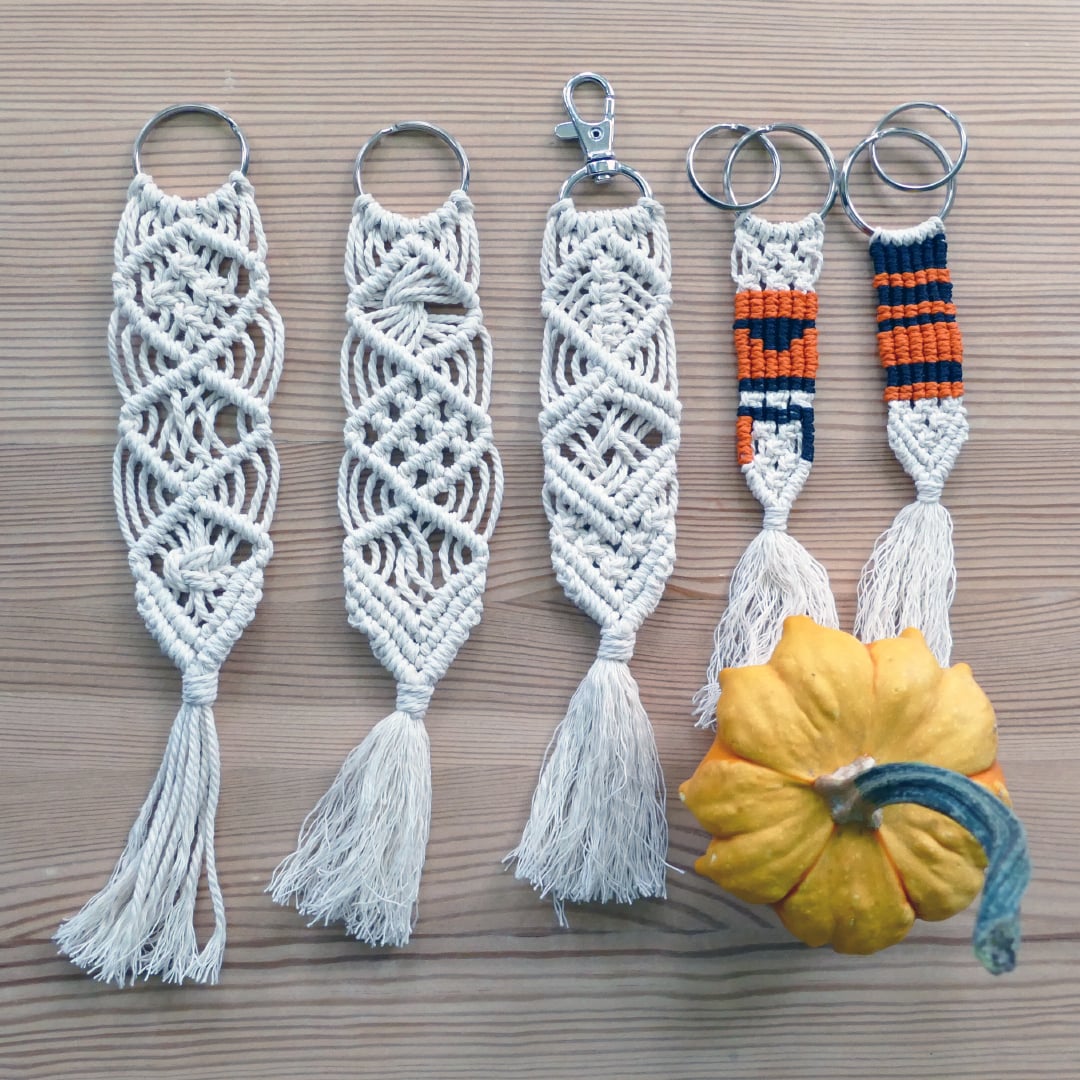
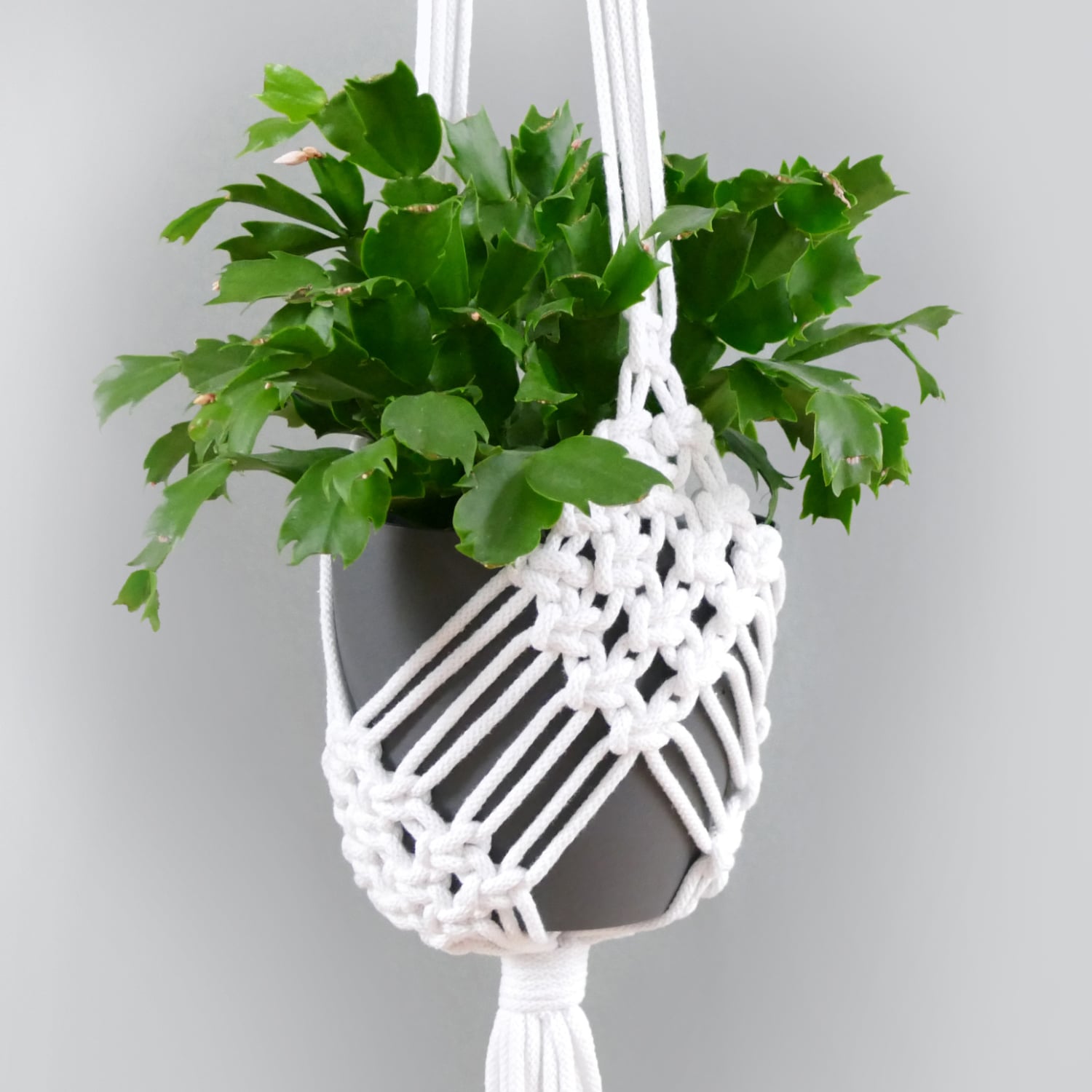
Teaching children or grandchildren? See Macramé for Kids for easy projects to make together.
Step 4: When are you ready for bigger projects?
When the knots feel easy and your knots look even, try a wall hanging or a plant hanger. They use the same knots — just more cords and more rows.
 Beginner
Learn the basic knots
Square knot, half hitch, lark’s head: the few knots almost every pattern is made of, slowly and step by step.Read the guide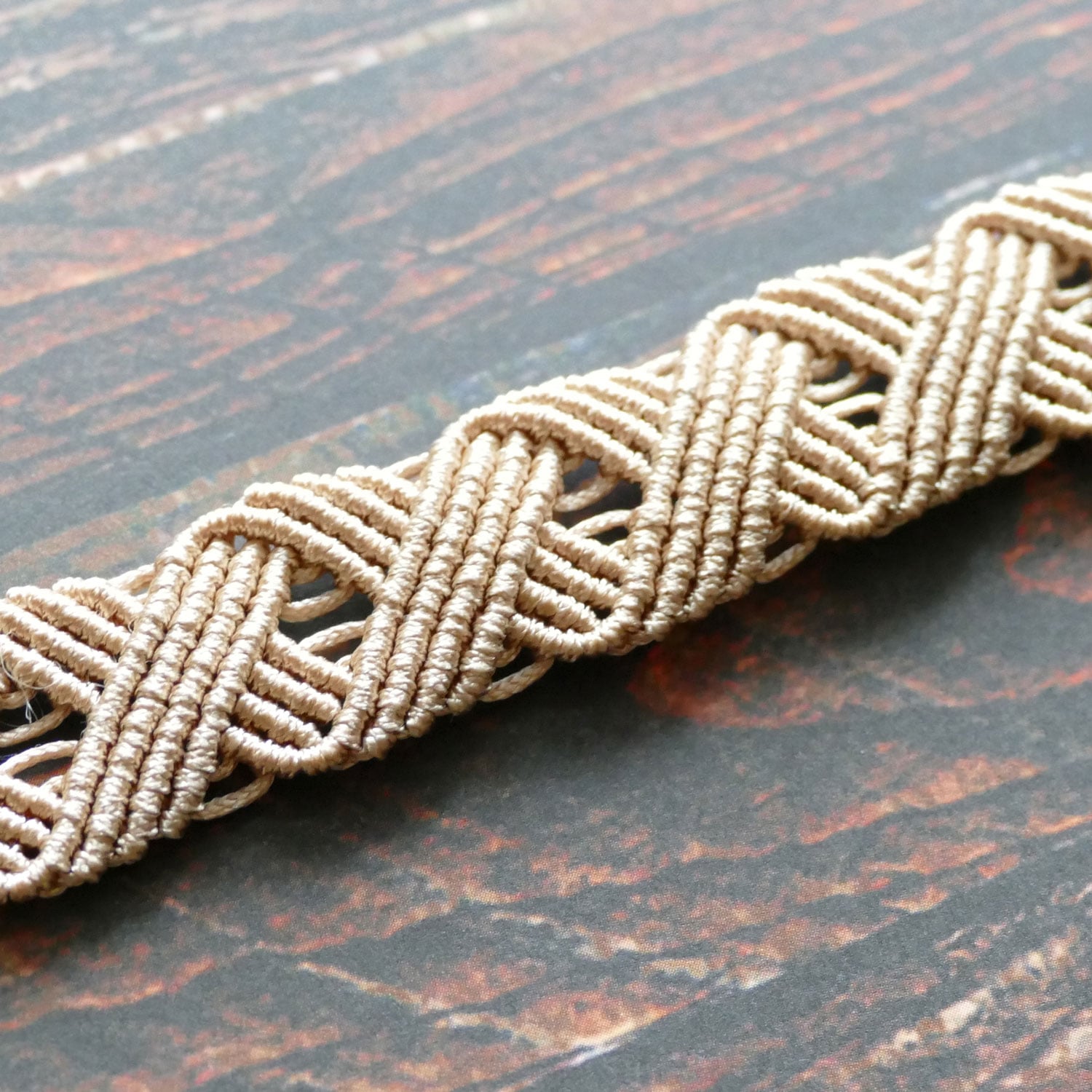 Next step
Your first small projects
Bracelets and keychains: quick to make, little cord needed, and every knot you learned is used again.110 patterns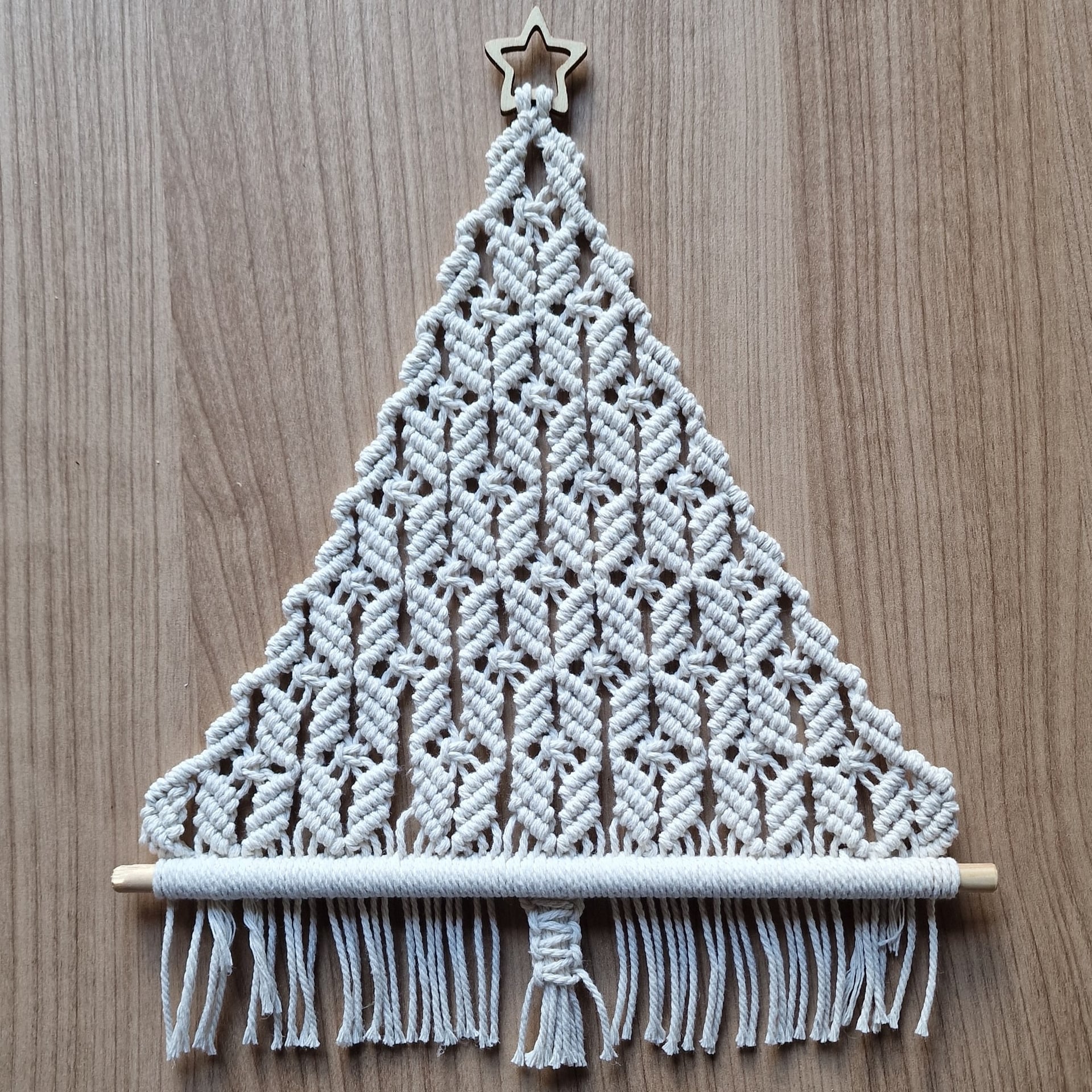 Bigger projects
Wall hangings & plant hangers
When the knots feel easy: larger pieces for your home, with patterns from simple to advanced.76 patterns
How long does it take to learn macramé?
- Your first knot: a few minutes.
- Your first bracelet or keychain: one evening.
- Feeling at home with the basic knots: two or three weeks of practising a little now and then.
- Your first wall hanging: after three or four small projects.
Common beginner mistakes (and how to avoid them)
- Cords cut too short. Knots use much more cord than you expect. Check the lengths in the pattern, or use the cord calculator in the Cord Guide, and add a little extra.
- A square knot that twists. If you always start from the same side, you are tying half knots, and they twist into a spiral. Start each new knot from the opposite side.
- Uneven knots. Pull every knot with the same strength, and fix the top of your work so it doesn't move.
- Starting too big. A large wall hanging as a first project can be discouraging. Begin small — you will learn faster.
Can you learn macramé online for free?
Yes. Macrame School has hundreds of free macramé patterns, each with a free step-by-step video you can pause and rewind, so you can learn at your own pace, at home — from your first knot to big wall hangings. When you want even more, the newest and most advanced patterns are in Macrame Courses for members of the Macrame School YouTube channel.
You can also install the free Macrame School app to keep your favourite patterns with you.