
Macrame Cord Guide: Which Cord to Buy and How Much You Need
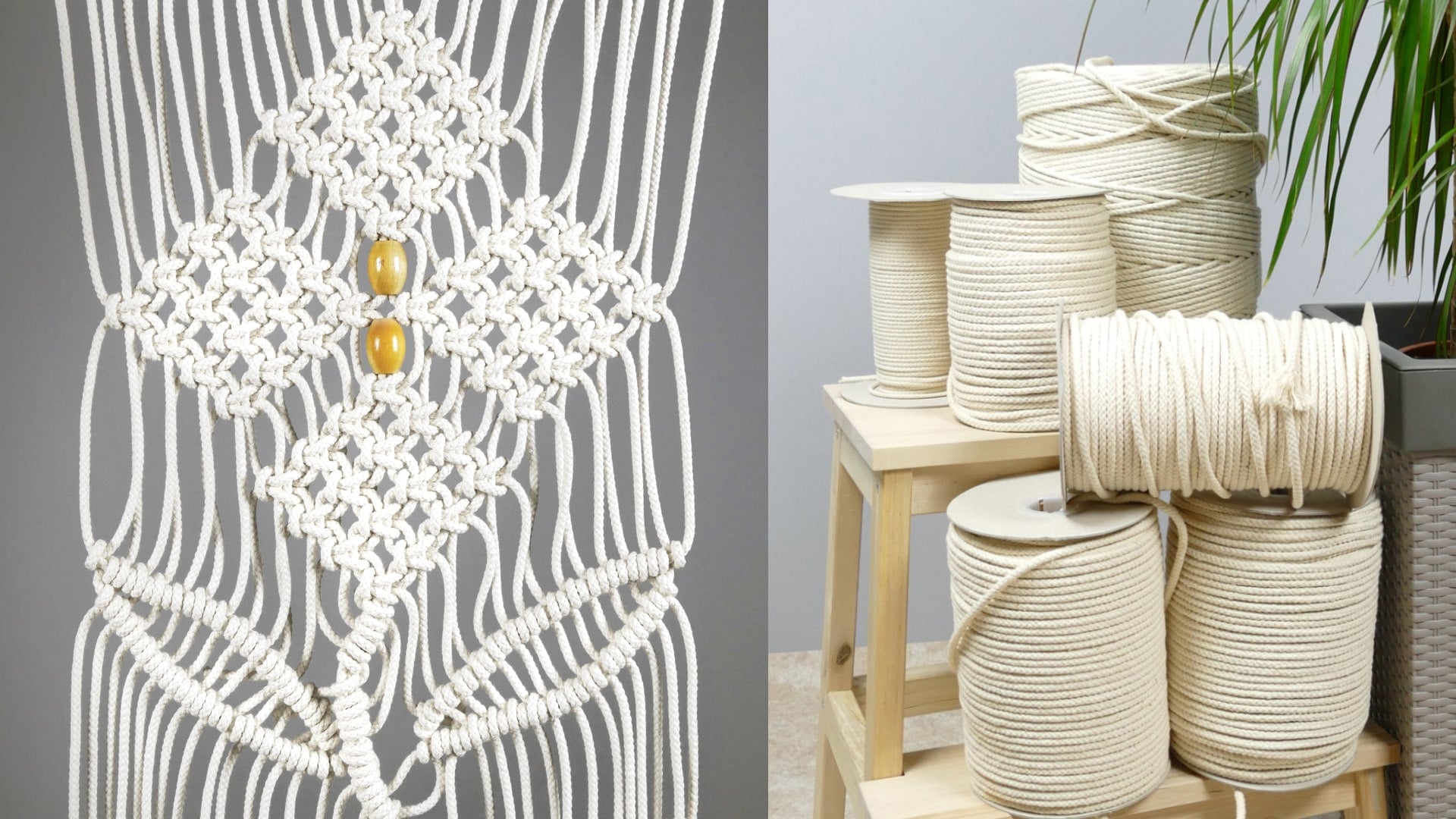
The cord decides how your macrame looks and how easy it is to knot. Make the same pattern in soft single-strand cotton and in a stiff braided rope, and you get two quite different pieces. Here is what the common cords are, which one suits which project, and how to work out how much you need before you start cutting.
Single strand, 3-ply or braided?
Most macrame cord is one of three kinds. You can tell them apart by looking at the cut end.
- Single strand (single twist): many fine fibers twisted once into a soft cord. It is the kindest to your hands, the knots look smooth, and the ends brush out into a fluffy fringe. It frays more easily, so it is best for wall hangings, leaves, feathers and other pieces that hang rather than get handled a lot.
- 3-ply (three-strand rope): three strands twisted together. It holds its shape well and every knot stays clearly visible. Untwist the ends and you get a wavy, crimped fringe, the classic boho look. A good all-rounder for plant hangers and wall hangings.
- Braided cord: fibers braided around a core. It is strong, smooth and does not unravel, which makes it right for plant hangers that carry weight, bags and keychains. The knots are a little firmer, and the ends will not brush out into a soft fringe.
Cotton, jute or something else?
- Cotton is the favorite for home decor: soft, easy to knot and available in every color.
- Recycled cotton feels much the same and is often a little less even, which many people like. A good choice if you want to waste less.
- Jute and hemp look natural and rustic and are very strong, but they are rougher on your hands. Nice for plant hangers, the garden and a farmhouse style.
- Waxed polyester and nylon are thin and smooth, do not mind water, and the ends can be sealed with a lighter. The usual choice for bracelets and jewelry.
Which thickness for which project?
- 0.5–1 mm: bracelets, anklets and small jewelry.
- 2–3 mm: keychains, ornaments, earrings and other small decorations.
- 3–5 mm: plant hangers, wall hangings, bags and most home decor. If you buy only one cord, buy this.
- 6 mm and thicker: large statement wall hangings and chunky pieces that you want to finish quickly.
Thinner cord gives finer detail but takes longer; thicker cord grows fast but needs more length for each knot.
How much cord do I need?
Knots eat cord quickly. As a rule of thumb, every strand needs three to six times the length of the knotted part, depending on how close the knots sit, plus the fringe. Thick cord makes bigger, rounder knots, so from 4 mm up it needs a little more again. If you fold the cord in half over a dowel or a ring with a lark’s head knot, cut it twice that long. The calculator below does the counting for you, and the drawing shows how long one cord is compared with the finished piece.
Macrame cord calculator
- Cut each cord
- 5.88 m (19.3 ft)
- Cords to cut
- 12 (24 strands)
- Cord in total
- 70.6 m (77.2 yd)
- Buy at least
- 77.6 m +10% spare
Each strand: finished length × 4.4 (medium knots, +10% for 4 mm cord) + fringe + 10 cm for mounting and finishing, doubled because the cord is folded in half. It is a rule of thumb: cut a test piece if you are unsure.
When a tutorial gives cord lengths, use those: they were measured for that exact pattern.
Before you buy
- Buy a little extra. Cord from a different batch can be a slightly different shade, so it is easier to buy enough at once.
- Knot a test piece. Ten centimeters of your pattern shows how the cord feels, how the knots look, and how much length they really use.
- Choose strength for weight. For plant hangers and bags, pick 3-ply or braided cord rather than single strand.
- For a fluffy fringe, use single-strand cotton and brush the ends with a fine comb or a pet brush, then trim.
- Keep cord out of the sun and away from dust until you use it, and colored cord will stay bright.
Projects to try
Each of these has a step-by-step video.
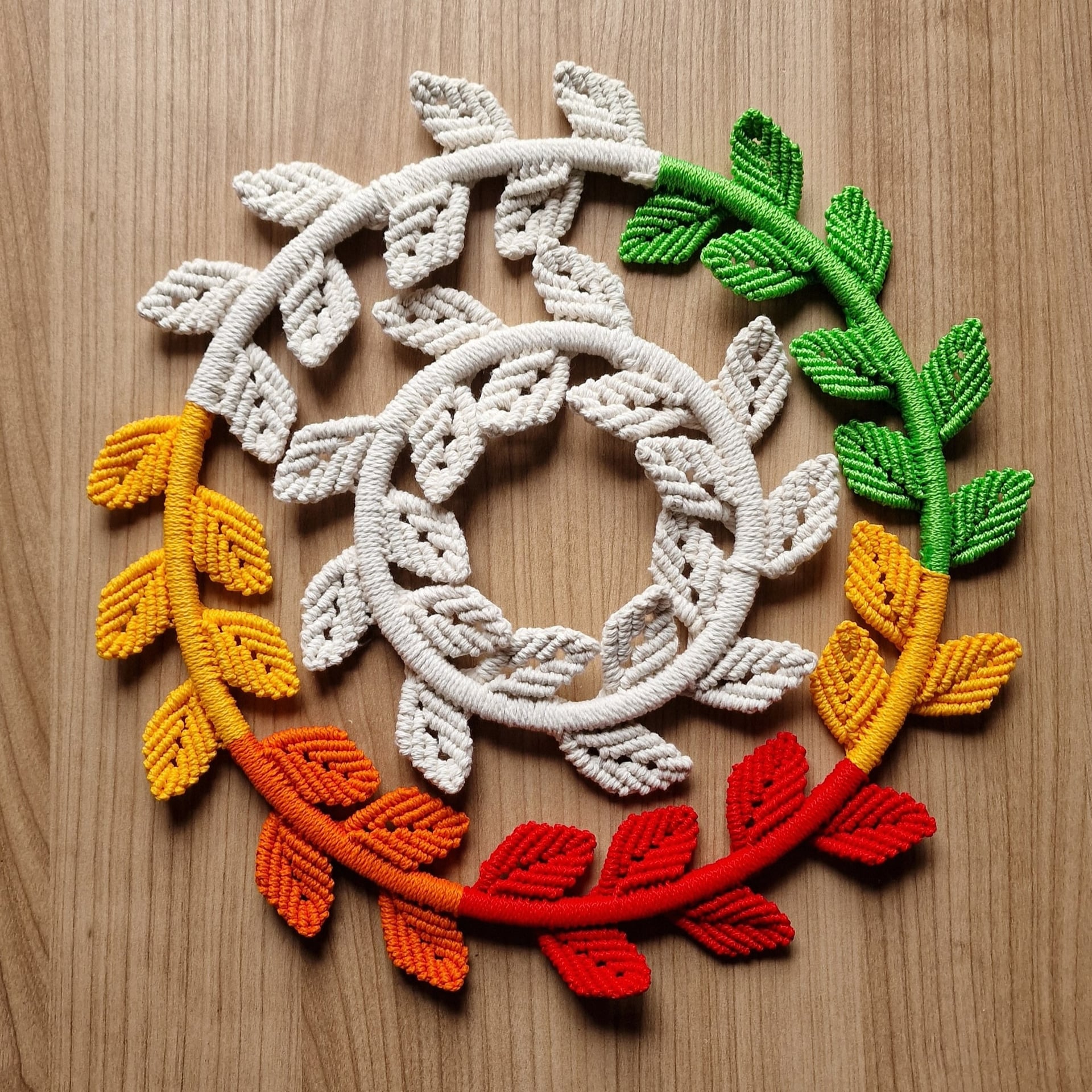
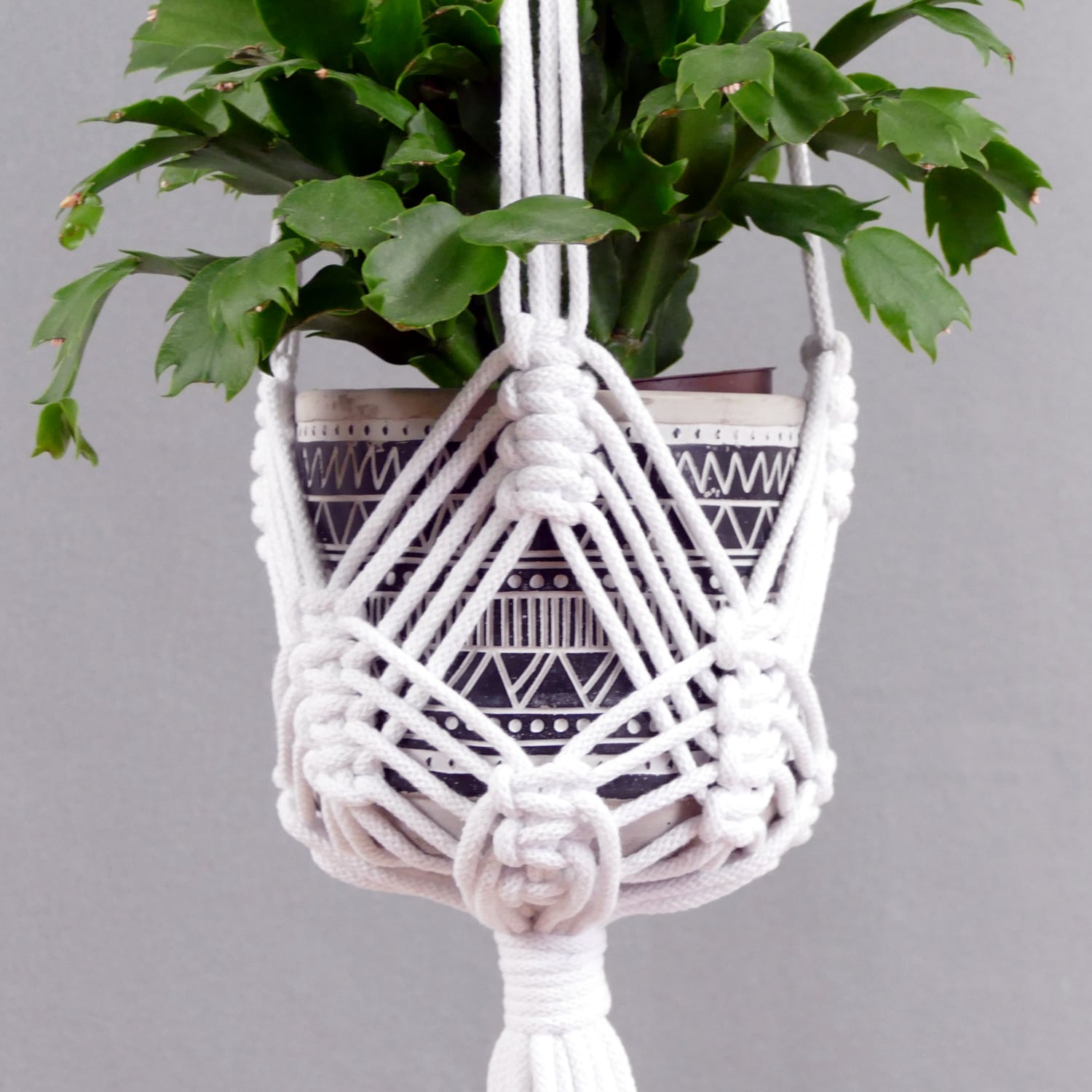
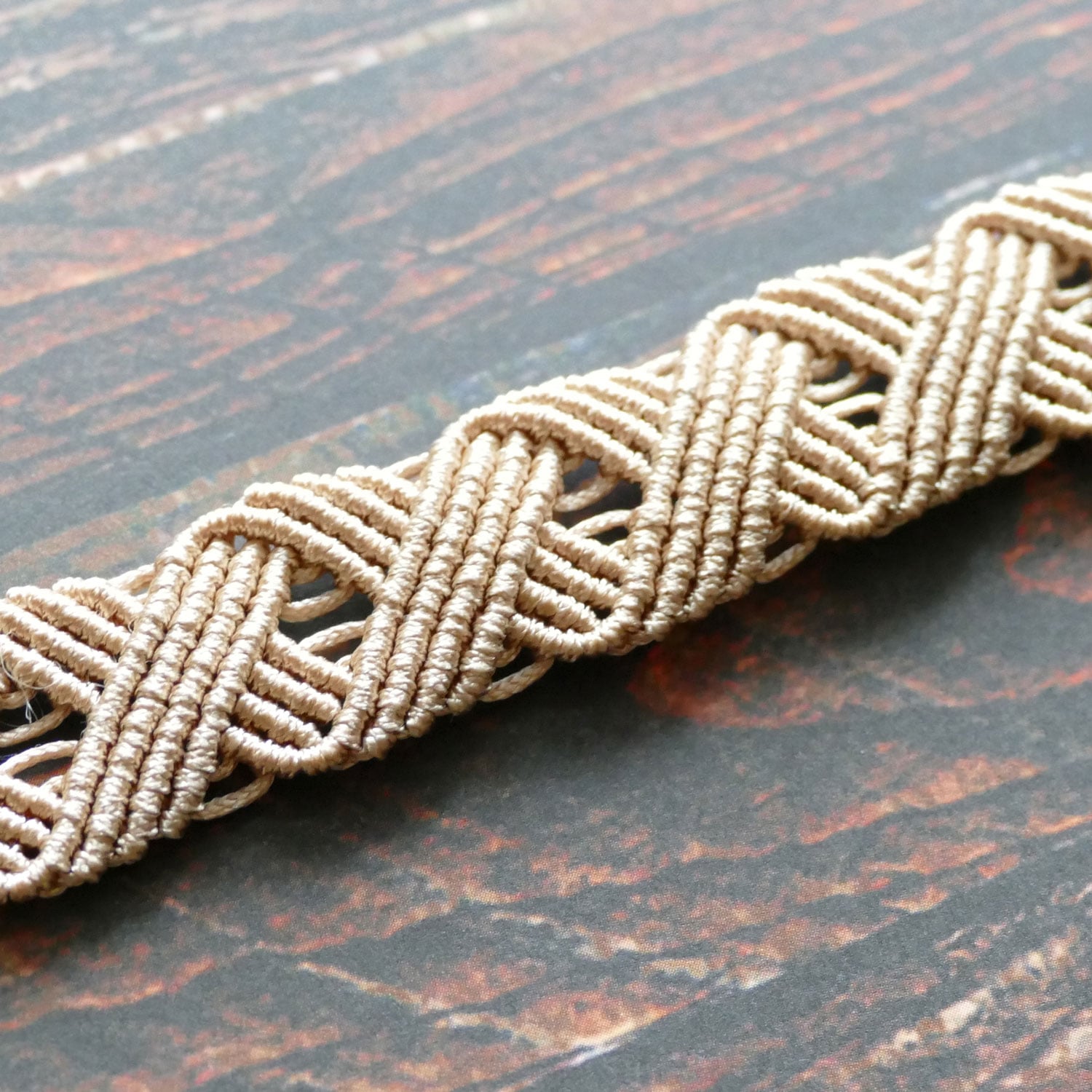
New to macrame? Start with the basic knots on our New to macrame? page.