
Basic Macrame Knots: Why the Square Knot Is King
Look at any macrame piece, a bracelet, a plant hanger, a big wall hanging, and you will find the same few knots again and again. You do not need to learn dozens of them. A handful will take you a very long way, and one of them, the square knot, does more of the work than all the others together.
Here are the knots worth learning first, what each one is for, and a free step-by-step video for each.
The square knot: the king of macrame
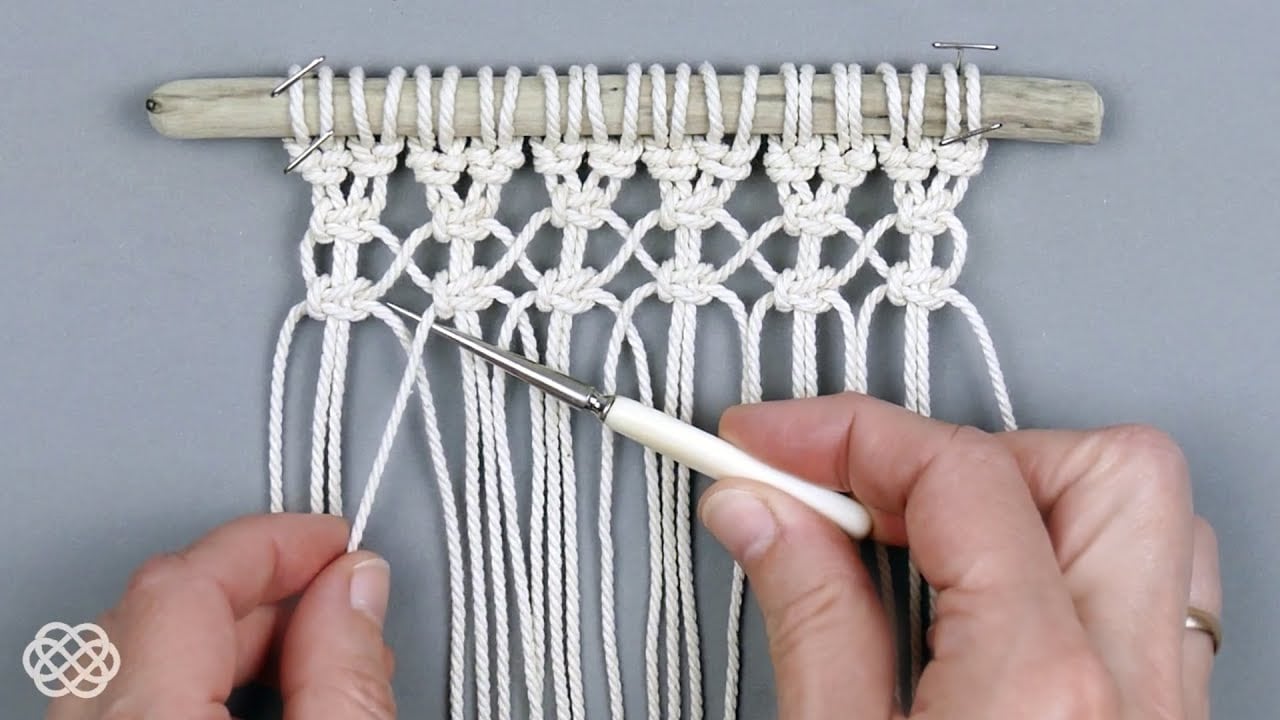
The square knot is made of two half knots, one tied to the left and one to the right, around two filler cords in the middle. Four cords in all. Pull it firm and it sits flat and neat, with a little bar on each side.
It is everywhere. Rows of square knots make bracelets. Alternating square knots, moved over by two cords on every row, make the open mesh you see in plant hangers and wall hangings. Square knots hold beads in place, frame leaves and fill in shapes. If you can tie it evenly, you can follow most macrame patterns.
The usual mistake: tying the same half knot over and over. Instead of a flat knot, the cords start to twist into a spiral. That is not wrong, it is a different knot, the spiral (half knot) sennit, but if you wanted a flat band, remember to switch sides every time: left, right, left, right.
A tip for even knots: keep the two filler cords pulled straight, for example tied to a clipboard or pinned to a board, and tighten every knot the same way. Even tension matters more than speed.
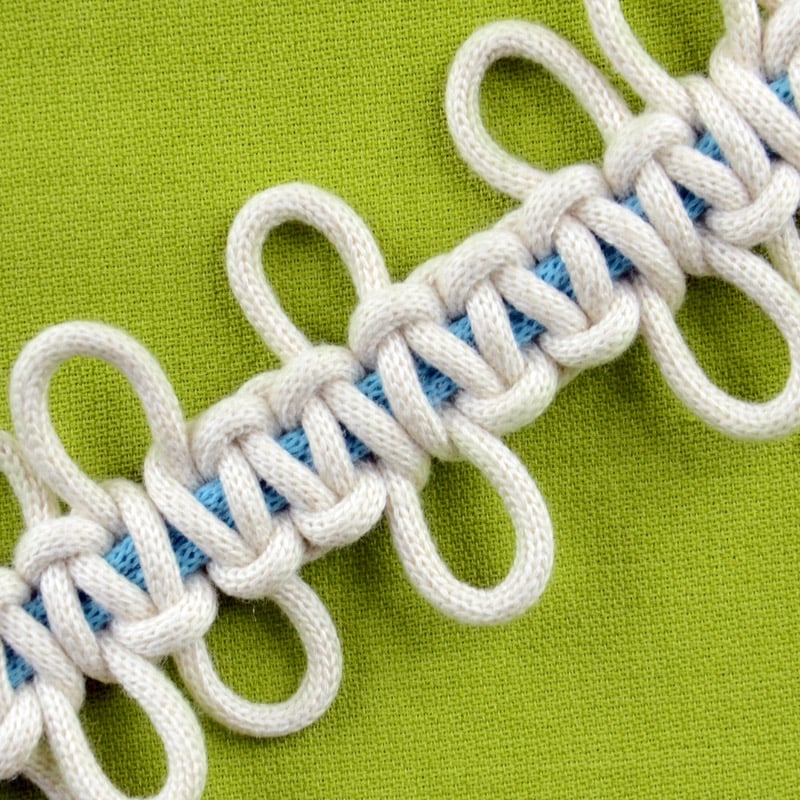
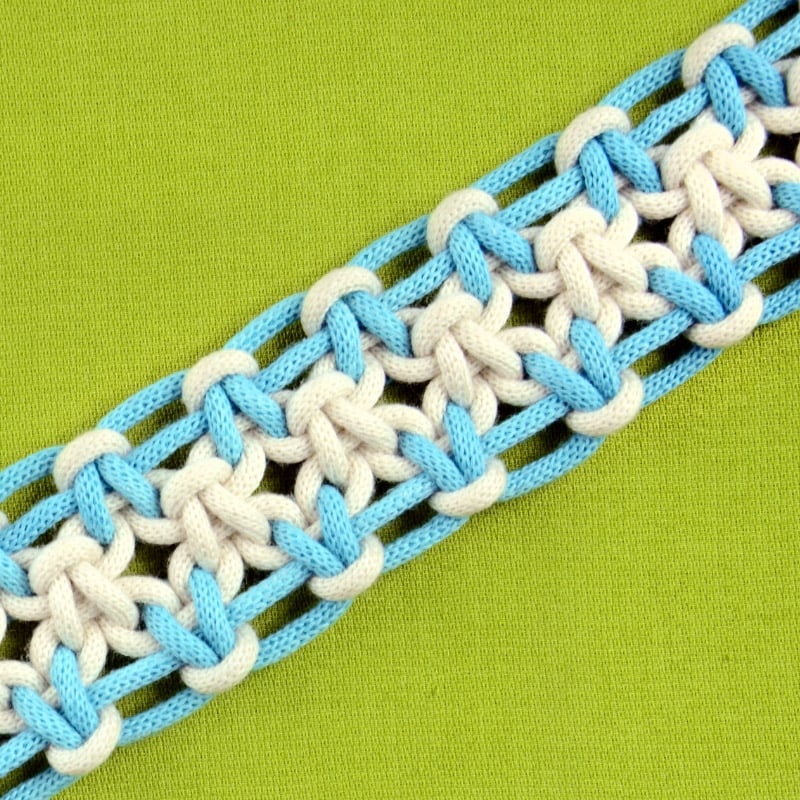
More from the square knot family
The other knots you will use
- Lark’s head knot: how almost every piece starts. Fold the cord in half, put the loop over the dowel or ring and pull the ends through it. One cord, two strands.
- Half hitch: one cord wrapped around another. Repeated, it makes a twisting spiral.
- Double half hitch: two half hitches side by side. Tied along a holding cord, they make the clean lines, diagonals and leaves you see in so many wall hangings. The Unisex Squares Bracelet is made entirely of double half hitches, a good way to practice them.
- Alternating and reversed half hitches: small variations that give chains and edges a different texture.
- Overhand knot: the simplest knot of all, for finishing ends and adding beads.
- Wrapping (gathering) knot: a cord wound around a bundle of strands to gather them, at the top of a plant hanger or the end of a tassel.
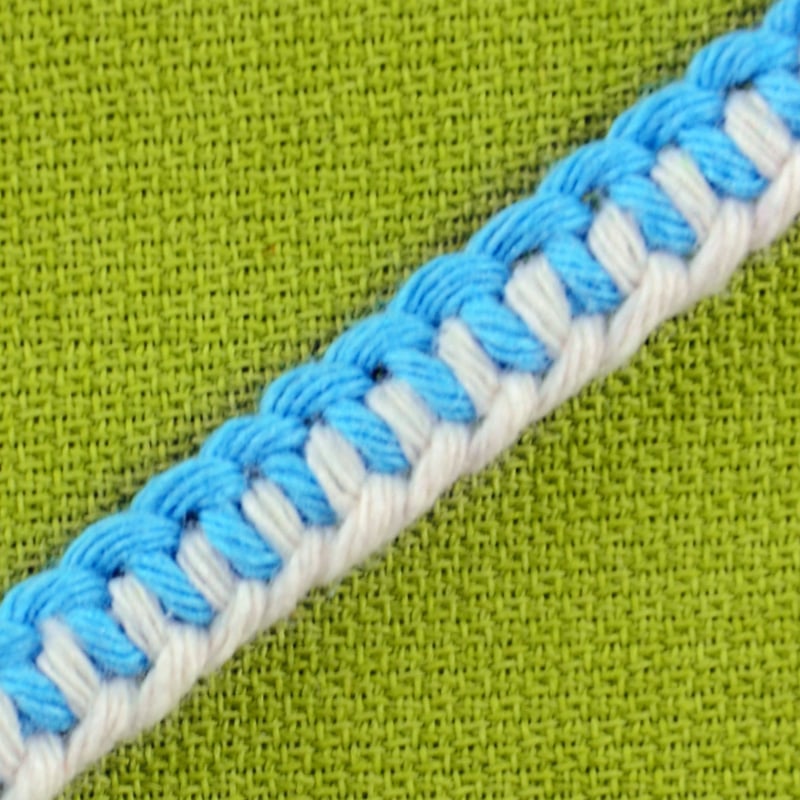
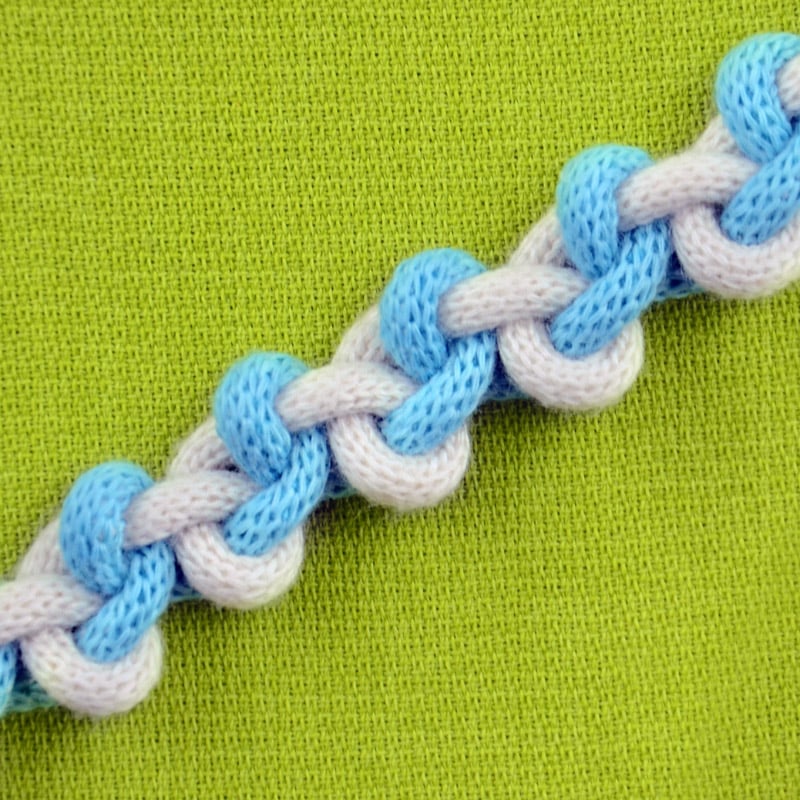
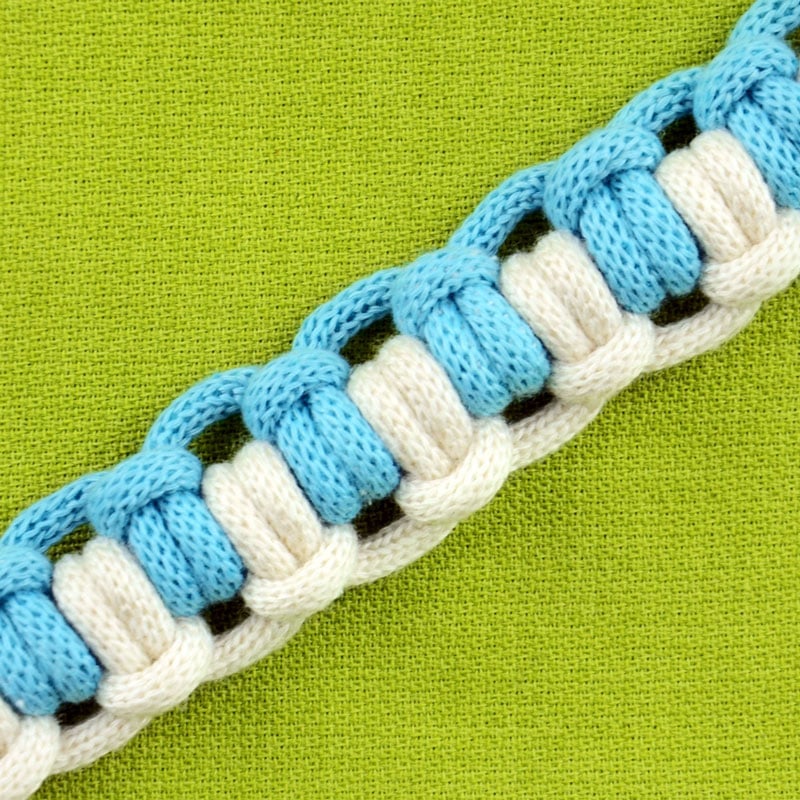
When the basics feel easy
These knots look more complicated, but they are built from the same moves. Try them once the square knot and half hitches come naturally. The crossed sennit is another good one for bracelets.
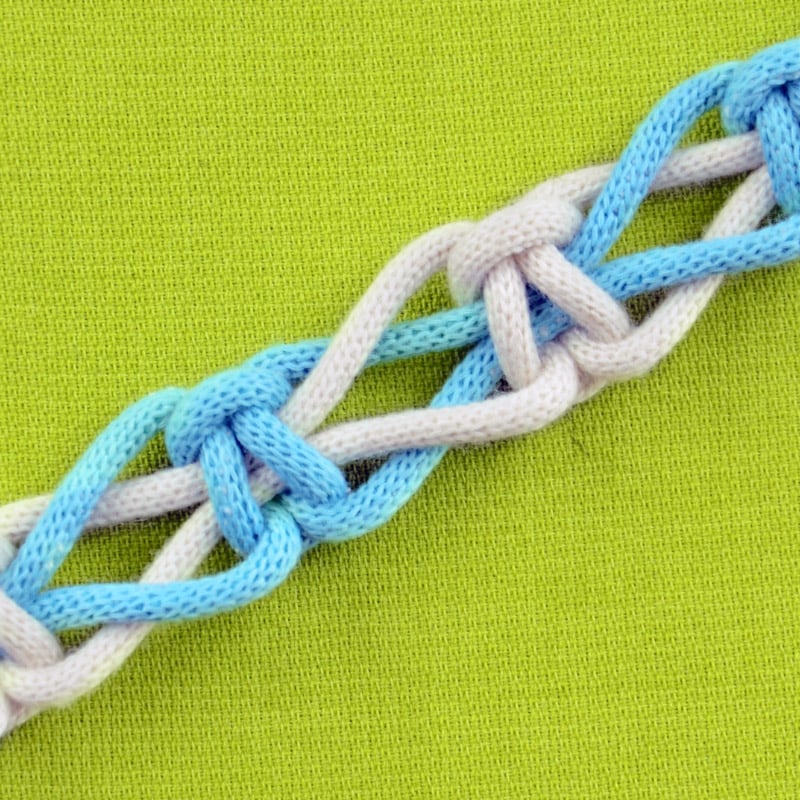
Knot cheat sheet
- Square knot – bracelets, mesh, almost everything – easy
- Lark’s head – starting a piece on a dowel or ring – easy
- Half hitch – spirals, chains – easy
- Double half hitch – lines, diagonals, leaves – easy to learn, takes practice to keep neat
- Overhand knot – finishing ends, holding beads – easy
- Wrapping knot – gathering strands, tassels – easy
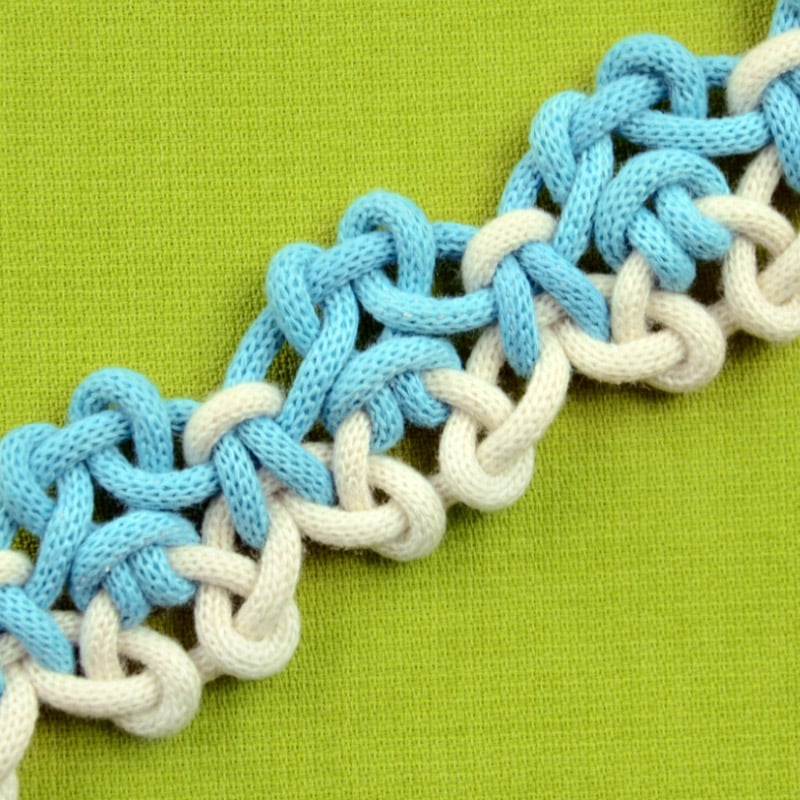
- Japanese, switch, cat’s paw – decorative details – intermediate
Practice with a real project
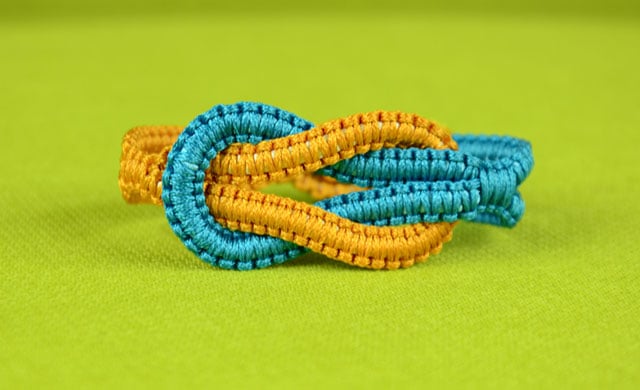
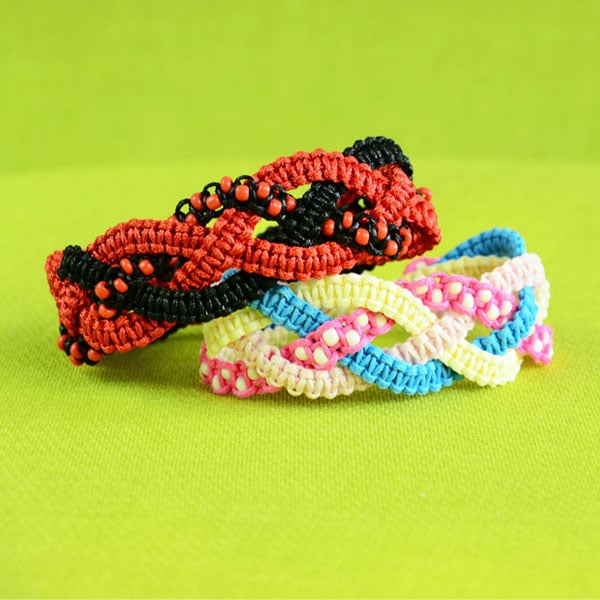
The quickest way to learn a knot is to make something small with it. These are made with square knots, and each has a free video.
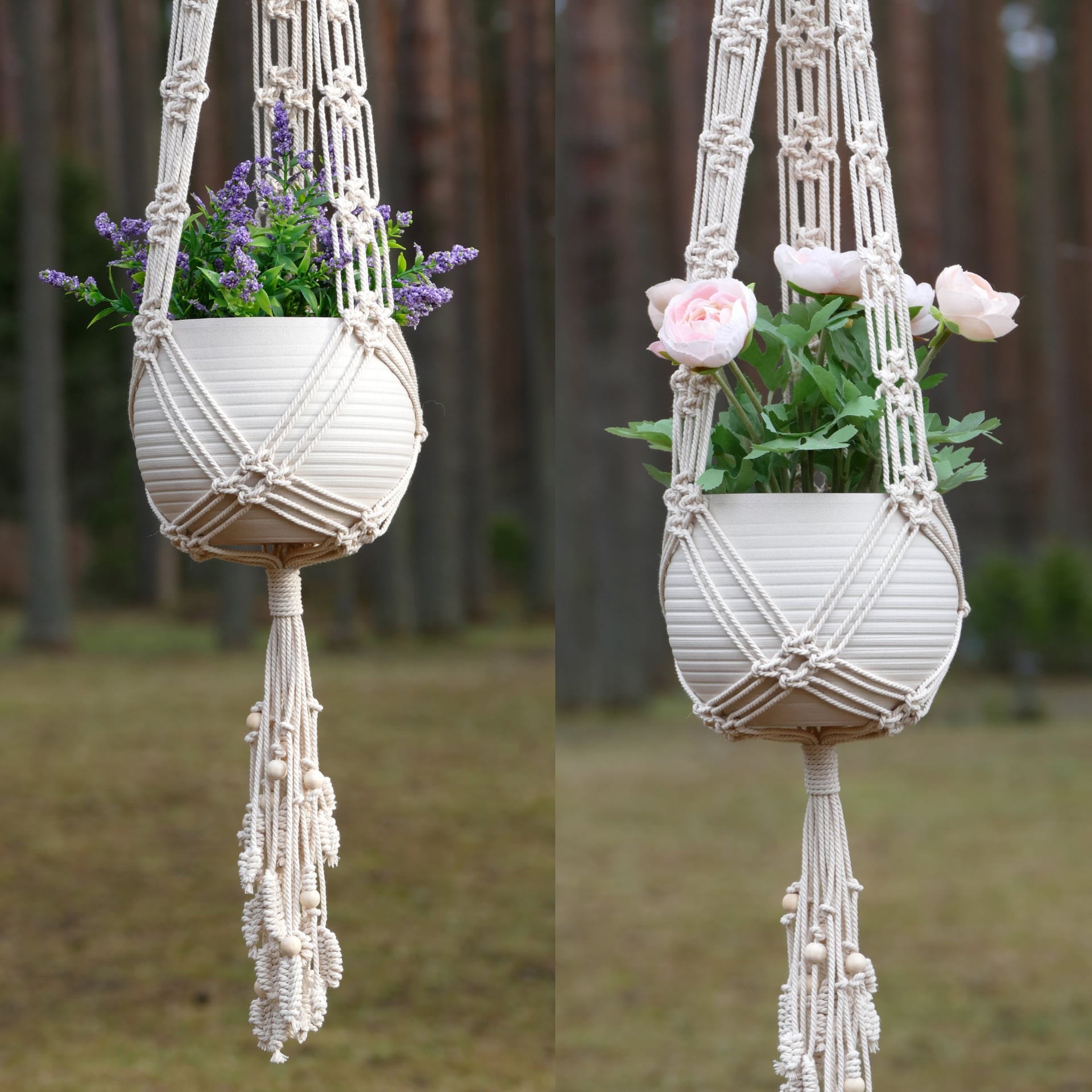
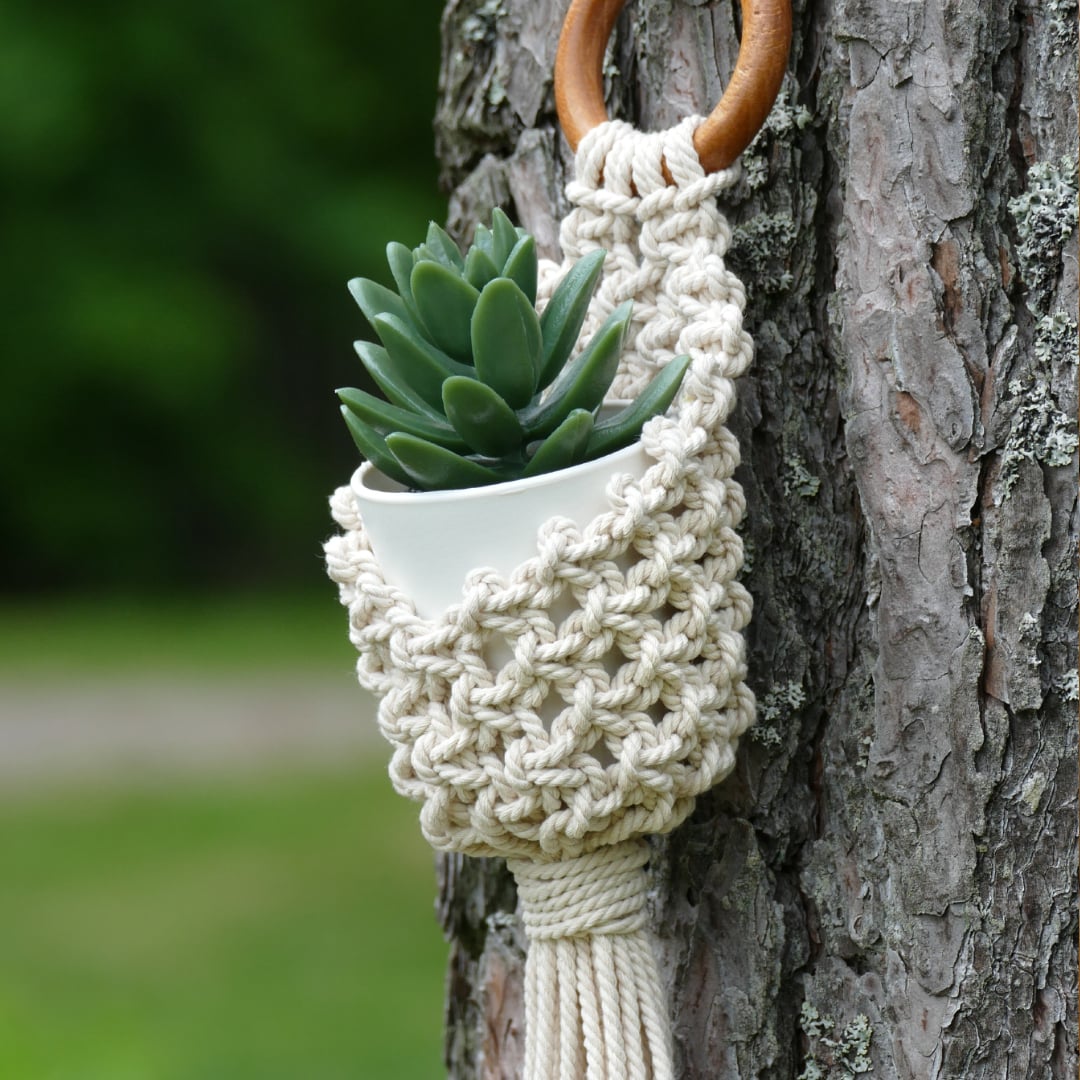
A few tips before you start
- Use thicker cord to learn. A 4–5 mm cotton cord shows every knot clearly and is easy to undo. Our cord guide explains the different kinds.
- Count your knots. Most patterns say how many square knots go in a row or a sennit; counting keeps both sides of a piece the same.
- Undo and try again. Untying a knot costs nothing, and every redo makes the next knot neater.
You will find every knot tutorial on our macrame knots page. New to macrame? Start with the three steps on New to macrame?.